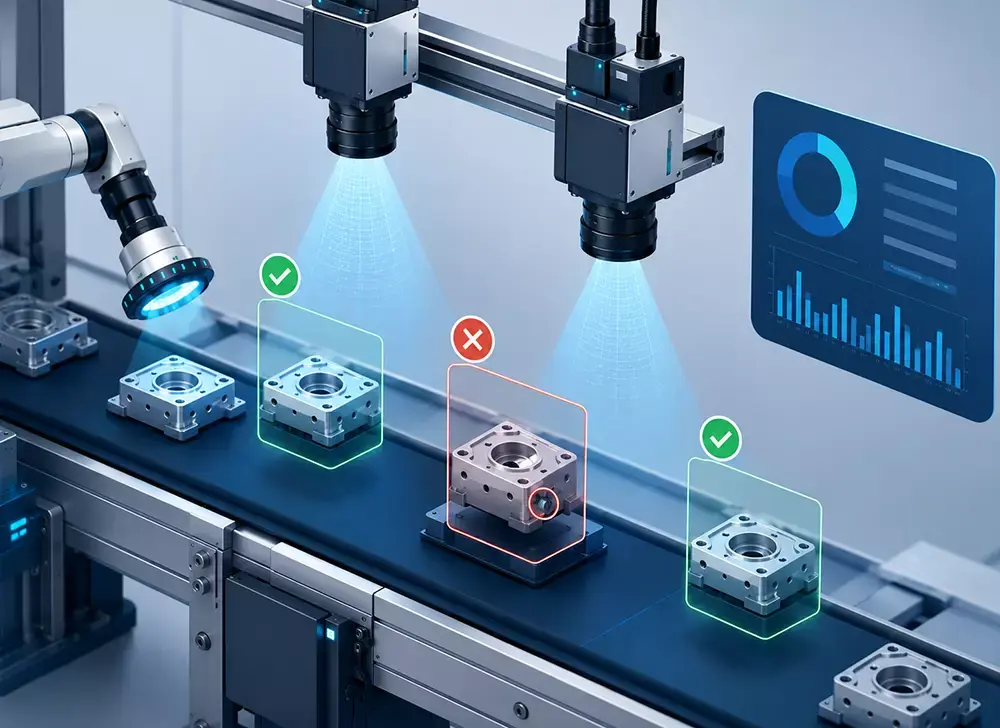
AI Vision & Quality Inspection
- High-Precision AOI
- Surface Defect Detection
- Automated Sorting Control
- Real-Time Yield Analytics
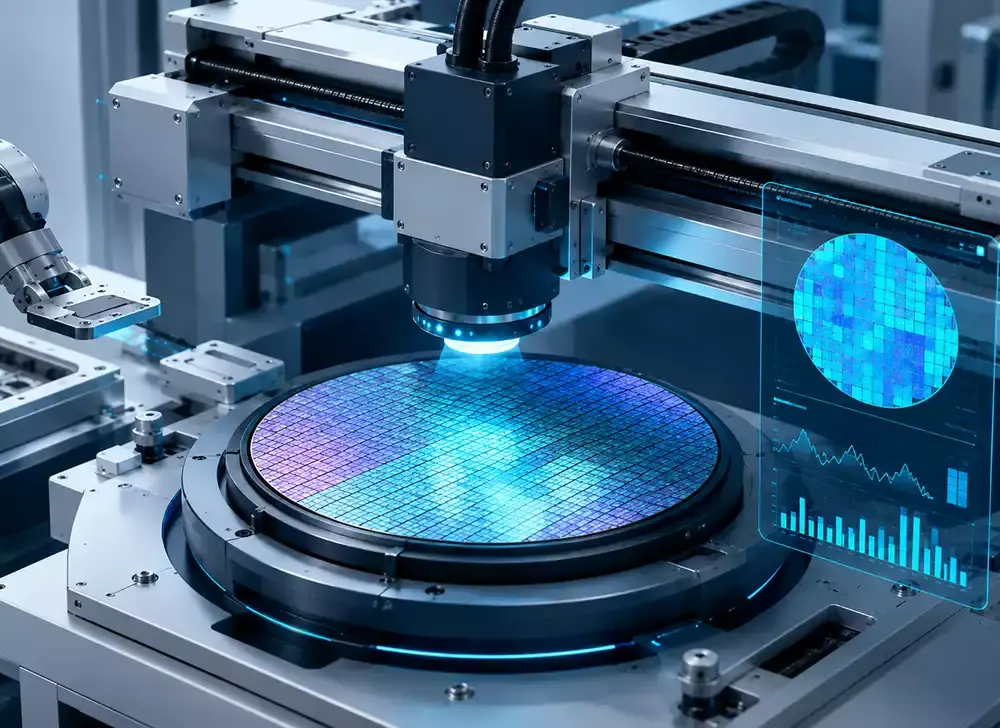
Portwell supports AI manufacturing applications ranging from AI vision and robotic automation to semiconductor equipment, machine control, HMI and AIoT-enabled factory data integration.
Our portfolio of embedded modules, single board computers, industrial systems, rackmount computers, human-machine interfaces and network appliances helps OEMs and system integrators build scalable automation solutions, accelerate deployment and optimize total cost of ownership.
On the line the work is done by an industrial automation computer, or by a fanless industrial computer in the cabinet - and increasingly by an industrial edge computer that performs real-time inference for video inspection next to the camera, so a reject never reaches the next station. That shift from central analysis to industrial AI automation is what the platforms below are built for.
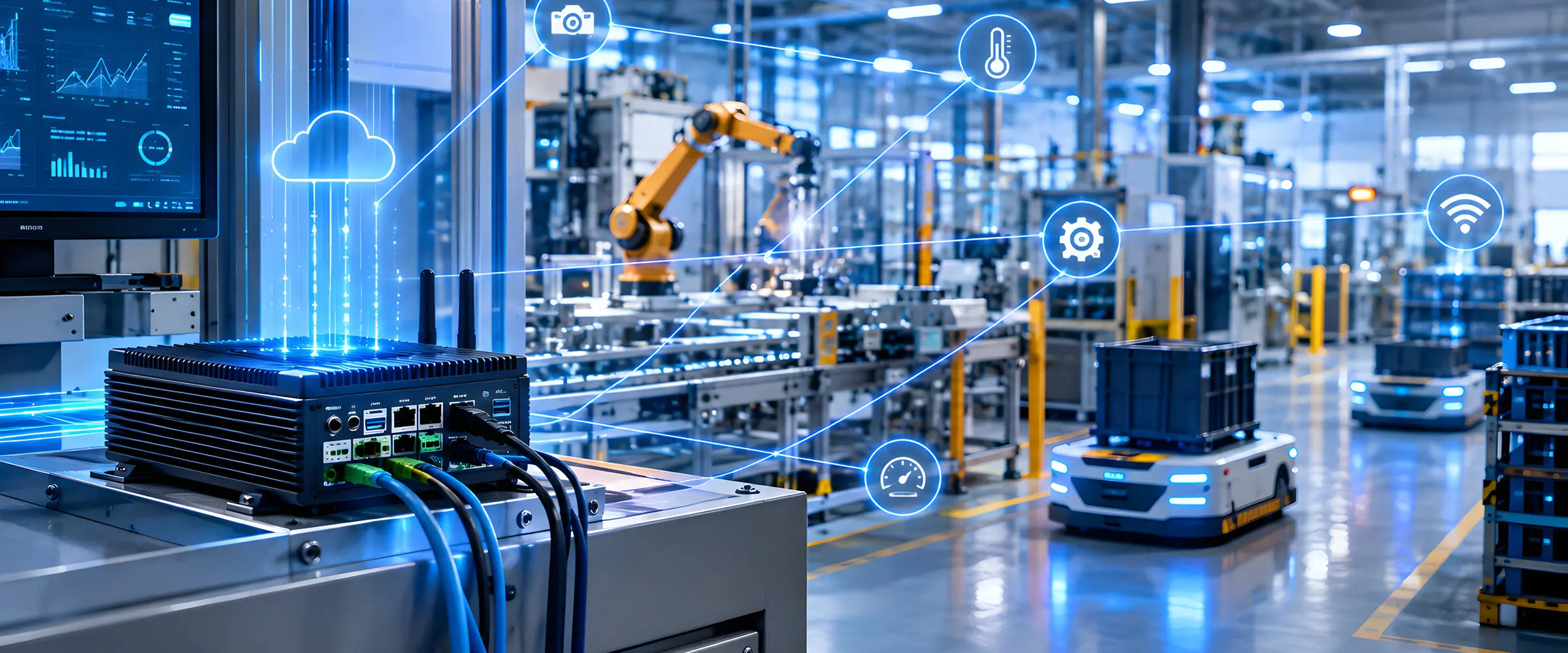
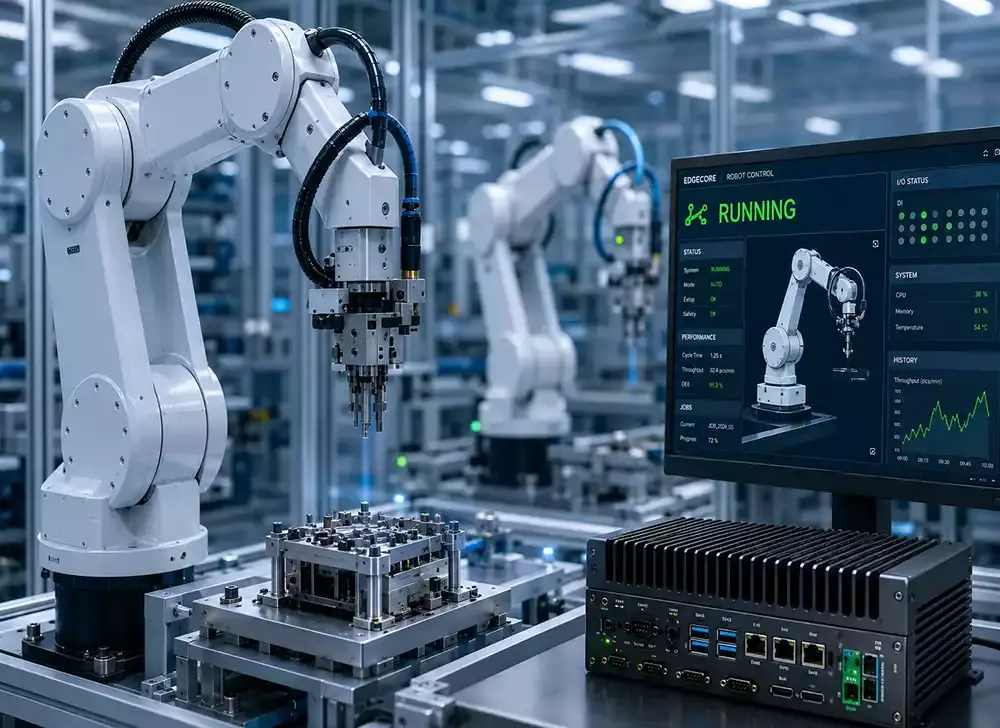
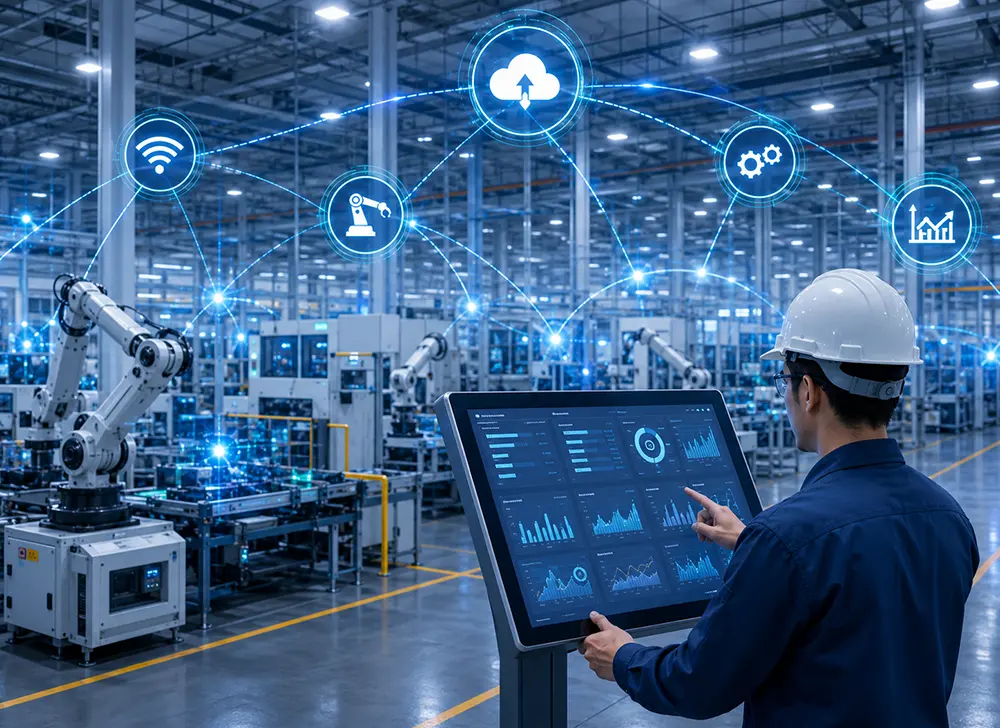
Modern automation equipment has to do more than control a machine. It needs to connect devices, process data in real time, integrate vision and AI workloads, and remain reliable throughout long production lifecycles.
Process machine, sensor and vision data directly at the edge.
Connect machines, sensors, robots and legacy equipment across different protocols.
Deploy compact, fanless and rugged platforms directly on the factory floor.
Maintain qualified platforms over years without unnecessary redesign and requalification.
Portwell industrial computing platforms provide the interfaces and connectivity required to integrate machines, sensors, cameras, robots and existing equipment into connected production environments.
Collect and process machine and sensor data directly at the edge.
Bridge production equipment and higher-level IT systems for connected manufacturing.
Provide operators with real-time machine information, production data and control interfaces.
Embedded modules, SBCs, industrial motherboards, systems, rackmount computers, HMIs, and network appliances - scale from board to system without changing vendors.
Engineering, product development, production planning, quality assurance, integration, and logistics management delivering high-quality, price-competitive solutions.
Extended availability that protects equipment qualifications and minimizes disruption across production lifecycles.
Local application engineers guide platform selection through deployment.
A global leader in embedded computing and long-time Intel® Partner Alliance member, with product longevity and engineering expertise for OEMs and system integrators.
From board-level platforms for machine builders to complete AI vision and HMI systems - select the platform class that fits your equipment.
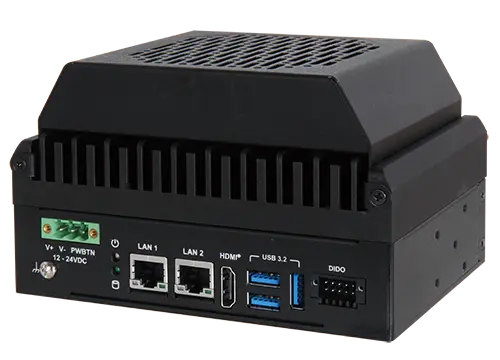
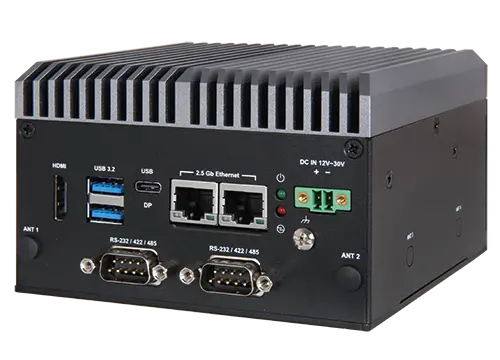
Compact, fanless systems with rich I/O for industrial control and edge deployment.
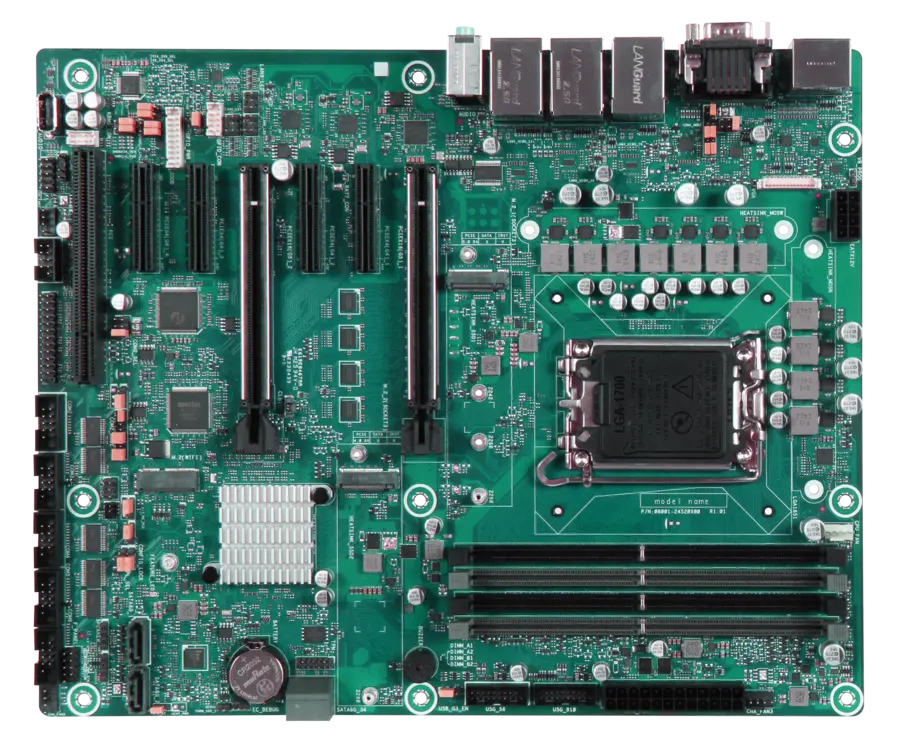
Flexible board-level platforms for machine builders and long-life industrial equipment.
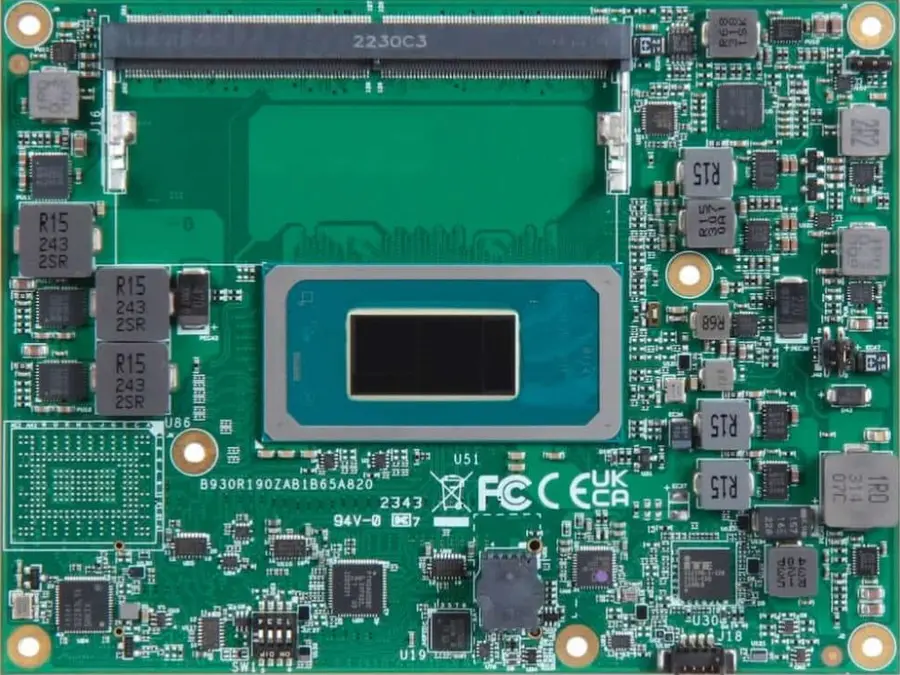
COM Express and other Computer-on-Module platforms for scalable system development and carrier board customization.
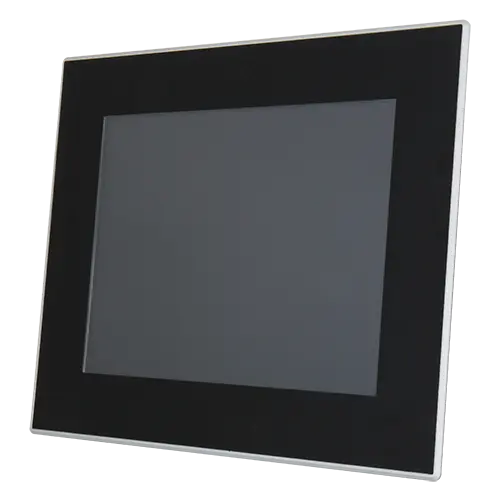
Rugged platforms for machine operation, process visualization and production monitoring.
Automation equipment often requires specific I/O, mechanical configurations, computing architectures or long-term supply commitments. Portwell's OEM/ODM capabilities support customized solutions from initial design through production.
Custom carrier boards, I/O configurations and module integration.
Custom chassis and mechanical configurations for specialized equipment.
Platform-specific BIOS and firmware customization.
Rapid prototyping, engineering validation and system testing.
Scalable manufacturing with quality control, traceability and long-term supply support.
Discover application-driven computing platforms for industrial environments, Edge AI, automation and connected systems.
learn moreEdge AI runs the analysis where the data is produced – on the machine, not in a data centre. The most common use is machine vision: a camera image is classified or measured within milliseconds, fast enough to reject a part on the line. Beyond inspection, Edge AI supports predictive maintenance from vibration and current signatures, robot guidance, and quality analytics across a production run. Processing locally keeps the latency predictable, keeps production data inside the plant, and keeps the line running when the network does not.
Portwell industrial platforms carry the interfaces that factory protocols run on: industrial Ethernet for PROFINET, EtherCAT and Modbus TCP, serial ports for Modbus RTU, CAN bus for drives and vehicles, and digital I/O for direct machine signals. On top of that, OPC UA and MQTT are the usual paths from the machine to higher-level systems. Which protocol stack is installed depends on the application; the hardware provides the interfaces, and the OEM/ODM services can add a specific I/O set where the standard configuration does not fit.
Automated Optical Inspection (AOI) is the camera-based check of a part or assembly against a reference. A lit camera station captures the part, and software decides whether placement, solder joints, dimensions, print or surface are within tolerance. It is standard in electronics manufacturing and is spreading into general assembly. AOI is a computing problem as much as an optical one: the images have to be captured, processed and judged at line speed, which is why these stations use GPU- or NPU-accelerated platforms with enough PCIe lanes for frame grabbers.
It depends on how much inference the line needs. For a single camera and a pre-trained model, a compact NVIDIA Jetson-based system is usually enough and stays fanless. For multiple cameras, high resolution or heavier models, a GPU-expandable industrial system gives the headroom and the PCIe slots for frame grabbers. If the vision station is built into your own machine, an embedded board or Computer-on-Module with a carrier board designed around your I/O is often the better fit. Our application engineers size this against the actual workload.
Because a machine outlives a consumer computing platform several times over. Once an equipment design is qualified – mechanically, electrically and often against a safety standard – any change to the computing board can mean a requalification. Consumer and office platforms disappear from the market within a year or two, which forces exactly that. Embedded boards with a multi-year roadmap and managed revision control keep the qualified design buildable, so a change is a planned event rather than a surprise.
Yes – that is what the Design & Manufacturing Services are for. They cover custom carrier boards and I/O configurations, custom chassis and mechanical integration, BIOS and firmware customization, pre-loaded OS images and private labelling. Prototyping, engineering validation and system testing happen in-house, and production scales from pilot runs to volume with quality control, traceability and long-term supply support.
Key specifications include Intel Atom/Core processors, DDR4/DDR5, 1GbE/2.5GbE LAN, RS-232/422/485, CAN bus and M.2/PCIe expansion. Fanless cooling, wide-temperature operation and PLC integration via EtherCAT, PROFINET or Modbus are also important for industrial automation computers.
Portwell’s LYNX-812A combines Intel Atom x7433RE, Hailo-8 AI acceleration up to 26 TOPS, dual 2.5GbE LAN and -40°C to 70°C operation. This rugged industrial edge computer supports machine monitoring, AI visual inspection and factory automation.
Industrial edge computers connect to PLCs through Ethernet, RS-485 and compatible industrial interfaces. EtherCAT, PROFINET, Modbus TCP/RTU, OPC UA and MQTT can support machine data acquisition, PLC-to-MES connectivity and OT/IT integration using appropriate hardware and software.
Portwell’s PJAI-1100F uses NVIDIA Jetson Orin NX with up to 157 TOPS in supported Super Mode configurations. It supports AI visual inspection, multi-camera inspection and automated defect detection. Real-time inference performance and latency depend on the camera setup and AI model.
Portwell’s LYNX-812A integrates a Hailo-8 AI accelerator delivering up to 26 TOPS, Intel Atom x7433RE and PoE Ethernet connectivity. It supports edge AI inference for machine vision, automated optical inspection (AOI) and production-line defect detection.
Industrial edge gateways collect PLC and sensor data using protocols such as OPC UA, MQTT and Modbus TCP, enabling OT/IT integration, local analytics and predictive maintenance. Portwell’s NANO-6065 provides dual 2.5GbE and USB 3.2 interfaces for custom industrial edge gateway development.
Yes. COM Express Type 6 and compatible COM-HPC Intel Core Ultra platforms enable modular industrial computing. Custom carrier board design supports PCIe expansion, industrial Ethernet, USB and application-specific I/O for OEM machine vision, factory automation and custom industrial PCs.
Tell us about your application - inspection, motion control, test equipment or factory connectivity - and our engineers will recommend the right platform or scope a custom design.