01
Branch & Edge
Compact, low-power platforms for distributed network deployments.
Portwell builds SD-WAN hardware for solution providers, network equipment vendors and service providers: a reliable platform foundation for SD-WAN, SD-Branch, uCPE, next-generation firewall, VPN, intrusion detection, content filtering, UTM and other virtualized network functions.
From compact fanless desktop gateways for the branch to 1U and 2U rackmount network appliances for the data center, the platforms combine high-density networking, hardware security and long-term availability - with options such as TPM, IPMI and LAN bypass. OCP 3.0 expansion cards add network interfaces where a deployment outgrows the onboard ports.
An SD-WAN appliance at the branch and a datacenter server in the core can share one software image when they share a platform family. Where a project needs a port count, a form factor or an I/O mix that no standard model covers, we build a custom network appliance on the same base.

Network infrastructure is becoming more distributed, software-defined and performance-intensive. Network appliances need to combine computing performance, high-density connectivity, security, flexibility and long-term availability in a single platform.
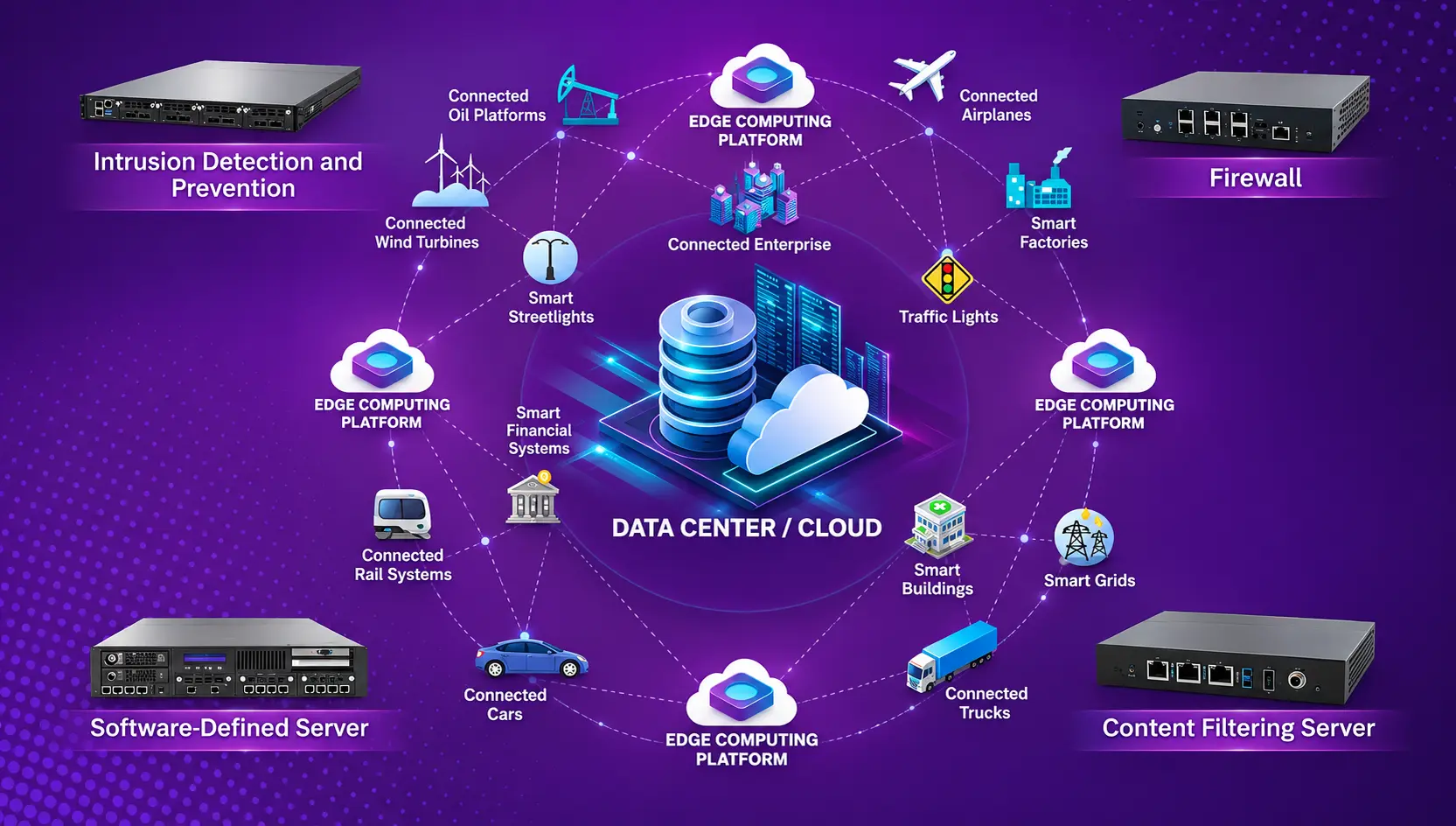
Compact, low-power platforms for distributed network deployments.
High-performance rackmount systems with extensive networking and expansion capabilities.
Rugged platforms designed for deployment beyond climate-controlled IT environments.
Flexible hardware platforms for SD-WAN, uCPE, firewall, routing and other virtualized network functions.
Defines and implements network security policies, including how end-node devices are allowed to connect to the network.
Permits or denies network communication based on pre-defined rules between the public internet and the private enterprise network.
Creates a virtual tunnel that protects the data and IP address of remote users on the public internet.
Identifies, logs and reports possible incidents and blocks detected intrusion attempts.
Runs on secure web gateways to scan incoming network data and prevent malware threats.
Monitors outbound sensitive data and stops the delivery of restricted content if not authorized.
An all-in-one appliance combining network security functions - less complex and more cost-effective.
Manages the bandwidth of outbound links between enterprise network and internet based on congestion and current load.
Advanced traffic management in the data center that controls traffic flow to servers based on application-specific criteria.
Choose by deployment: fanless desktop systems for branch and edge sites, compact appliances for SD-WAN and uCPE, and 1U/2U rackmount platforms for enterprise and data-center security.
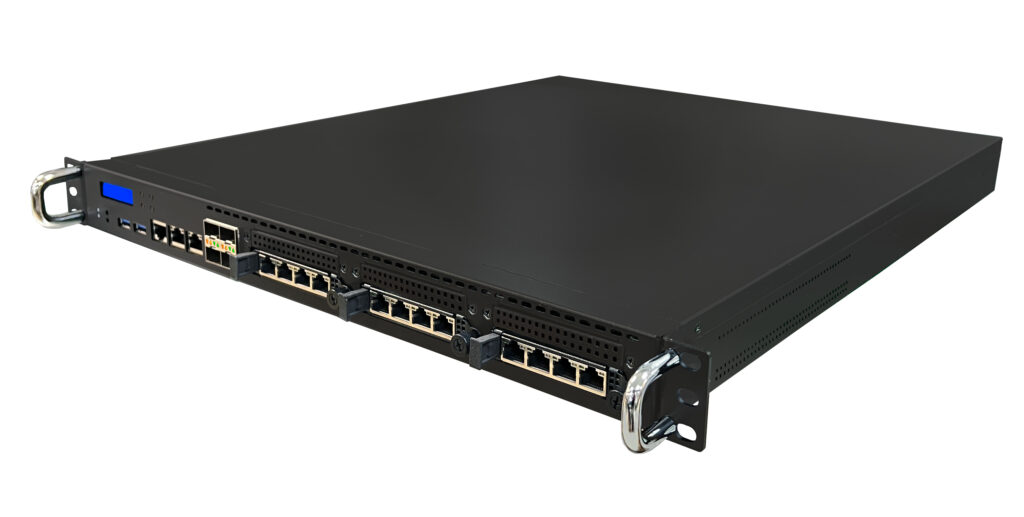
Compact, high-performance platforms for firewalls, SD-WAN, and network security applications.
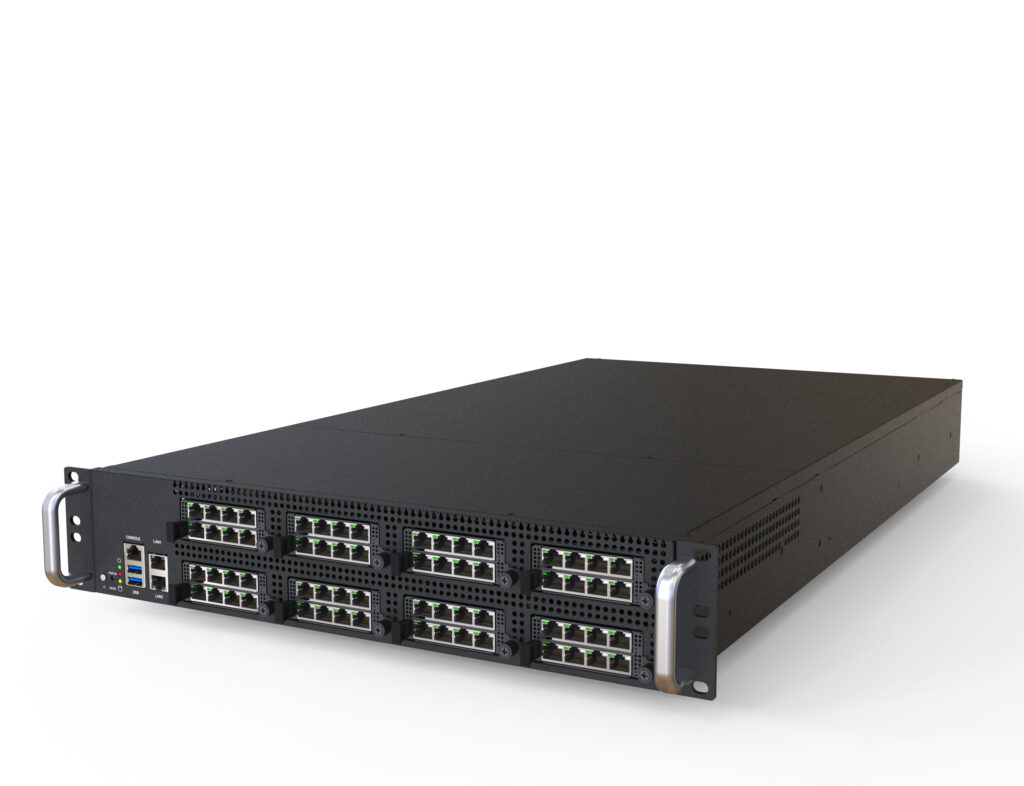
Scalable, high-throughput platforms for demanding network security, DPI, and data center workloads.
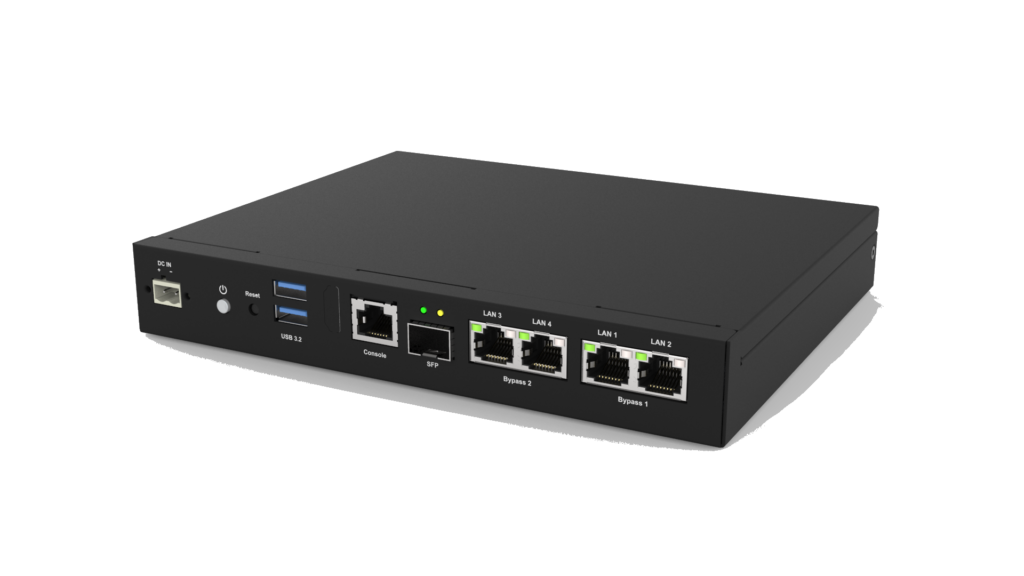
Compact, high-performance platforms for SD-WAN, network security, and edge connectivity.
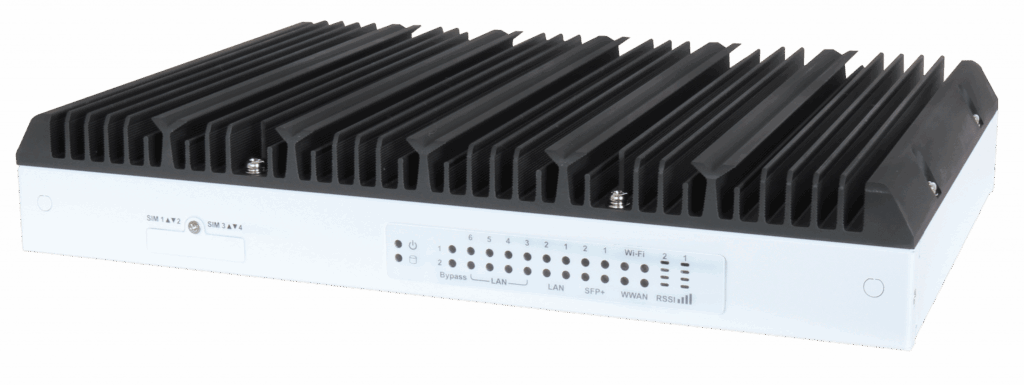
AMD-powered platforms for network security, SD-WAN, and distributed edge deployments.
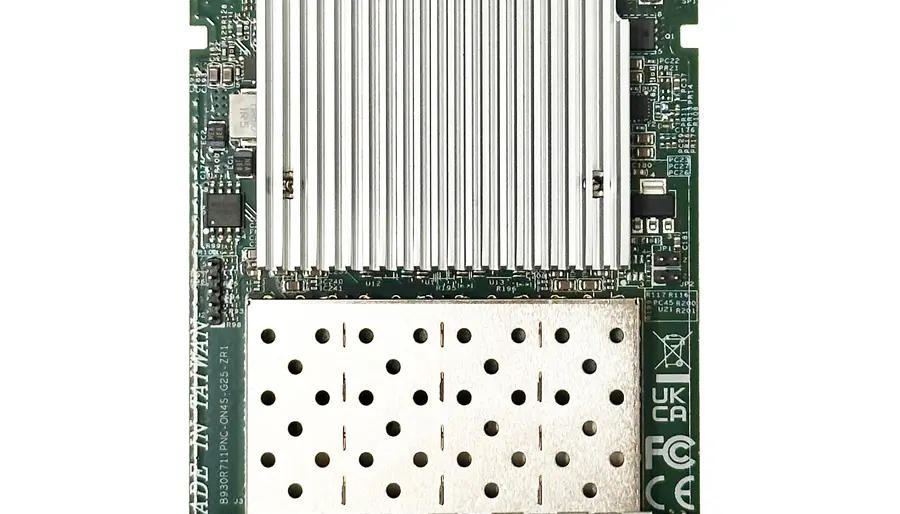
*An OCP Accepted™ Network Adapter
High-speed Ethernet expansion with flexible OCP NIC 3.0, PCIe, and bypass options.
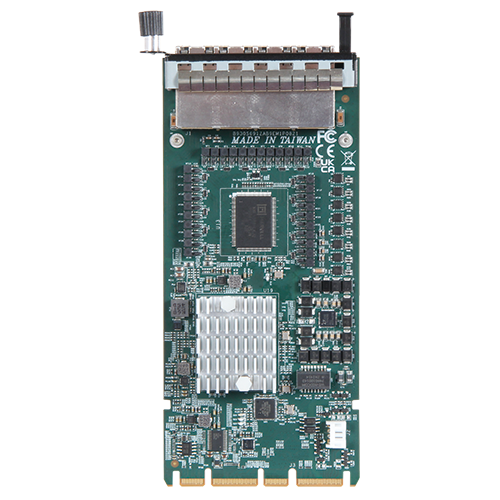
Modular expansion for PoE+ connectivity, Edge AI, and SD-Branch applications.
Thermal analysis, ingress protection, vibration, HALT, ESD, EMS, power integrity, EMI and signal integrity testing.
A global leader in embedded computing and long-time Intel® Partner Alliance member, with product longevity and engineering expertise for OEMs and system integrators.
Engineering, product development, production planning, quality assurance, integration and logistics.
Extended availability and managed revision control that protect your qualifications across long deployment lifecycles.
Local application engineers guide platform selection through deployment.
Copper and fiber ports, SFP+/QSFP and OCP NIC expansion - scaled to the throughput of your network stack.
Hardware-level bypass helps maintain network traffic continuity if an appliance loses power or experiences a software failure.
Optimized packet processing for demanding network workloads.
Options including IPMI and TPM for remote administration and hardware-based security.
Network equipment vendors need hardware that remains stable throughout the lifecycle of their software and network products. Portwell's OEM/ODM capabilities support customization from initial platform design through production.
Custom port configurations, expansion cards and NIC/bypass solutions.
Custom chassis and thermal engineering for application-specific deployments.
BIOS/firmware customization, secure boot and OS/network-stack image pre-loading.
ODM/OEM branding, system integration and validation.
CE, FCC and target-market approval support.
Pilot production, volume manufacturing, traceability and logistics.
Discover application-driven computing platforms for industrial environments, Edge AI, automation and connected systems.
learn moreuCPE stands for universal Customer Premises Equipment: one standard x86 appliance at the customer site that runs several network functions as software — firewall, SD-WAN, routing, WAN optimisation — instead of a separate box per function. The hardware stays the same; what it does is defined by the software on it.
SD-WAN manages the wide-area connections of a site: which link a packet takes, and how the traffic between branch, data centre and cloud is steered. SD-Branch goes one step further and puts the local network of the branch — LAN, Wi-Fi, security — on the same platform.
Both remove work from the general-purpose CPU path. Intel® QuickAssist Technology offloads cryptography and compression to dedicated hardware, which matters for VPN and TLS throughput. DPDK bypasses the kernel network stack and processes packets in user space, which raises packet rates and keeps latency predictable.
LAN bypass connects two network ports directly in hardware when the appliance loses power or its software fails. The traffic keeps flowing through the device instead of stopping at it — important wherever an inline appliance sits in a path that must not go down with it.
Desktop appliances are compact and fanless and are built for branch offices, edge sites and places without a server room. Rackmount systems are 1U or 2U, offer far more networking and expansion, and are built for enterprise and data-centre deployments — including redundant power supplies.
Yes — through M.2 or mini-PCIe slots for a cellular module and the matching antenna openings. Which platform fits depends on the module, the number of SIM slots and the thermal budget; our engineers can scope that for a given deployment.
Yes. Portwell’s Design & Manufacturing Services cover custom network I/O and expansion cards, mechanical and thermal design, BIOS and firmware including secure boot and pre-loaded images, ODM/OEM branding and integration, certification support, and the step from pilot to volume production.
Network access control, firewall, VPN, intrusion detection and prevention, anti-spam and anti-virus gateways, content filtering, unified threat management, load balancing and application delivery control — on the same hardware family, differentiated by the software that runs on it.
Portwell’s PNSR-6001 is a 1U network appliance featuring a single Intel Xeon 6 processor, DDR5 ECC and four OCP NIC 3.0 PCIe Gen5 slots. The 2U PNSR-6000 supports dual Intel Xeon 6 processors, eight OCP NIC 3.0 slots and additional PCIe Gen5 expansion for high-performance network security applications.
Portwell offers 1U and 2U rackmount network appliances with configurable high-speed Ethernet interfaces. The PNSR-5001 supports 25GbE SFP28, the PNSR-5002 features dual 100GbE QSFP28, and selected OCP NIC 3.0 configurations support higher aggregate network bandwidth.
A 2U network appliance provides additional space for processors, memory, network modules, cooling and PCIe expansion. Portwell’s PNSR-6000 supports dual Intel Xeon 6 processors and eight OCP NIC 3.0 slots, making it suitable for scalable NGFW, VPN and deep packet inspection hardware architectures.
Portwell’s PNSR-5001 integrates Intel Xeon D-2800/D-2700 processors, four 25GbE SFP28 ports, three OCP NIC 3.0 slots, IPMI management and redundant power supplies for configurable firewall and network security hardware.
Portwell’s PNSR-6000 and PNSR-6001 support PCIe Gen5 with eight and four OCP NIC 3.0 slots respectively. These modular architectures enable configurable high-speed network interfaces for firewall, VPN, DPI and network traffic processing applications.
Portwell’s ANS-7A44E integrates AMD Ryzen Embedded V3000, six 2.5GbE RJ45 ports, two 10GbE SFP+ ports and DDR5 memory. Its fanless design supports SD-WAN, uCPE and distributed network security deployments.
Yes. Portwell provides OEM/ODM Design and Manufacturing Services for 1U and 2U rackmount network appliances, including CPU selection, OCP NIC 3.0 modules, network interface customization, PCIe expansion, redundant power supplies and application-specific hardware integration.
Tell us about your software, network workload, deployment environment and connectivity requirements. Our engineers will help you identify the right platform or scope a customized appliance.